Tuskegee’s librarian: Dr. Sara Delaney brought healing through books
A visionary who redefined healing through literacy
At a time when hospitals primarily focused on physical treatment, Dr. Sara Marie Johnson Peterson Delaney believed that healing also lived in the pages of a book.
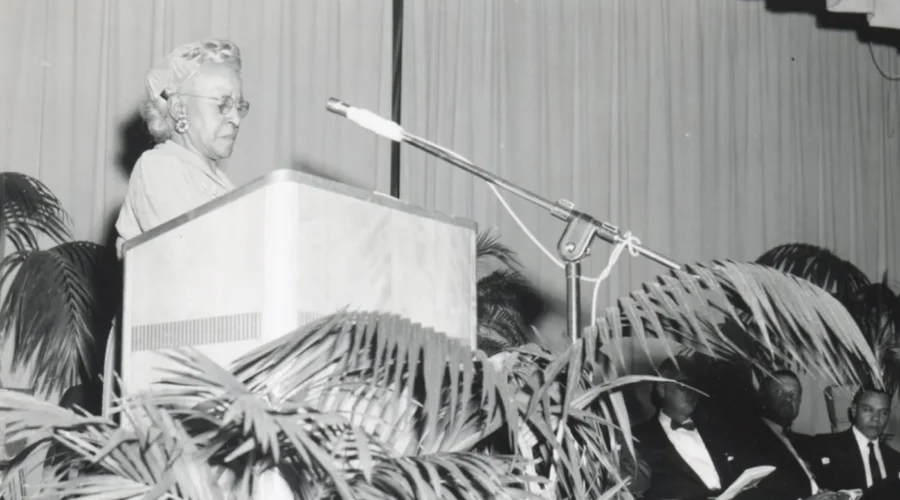
For 34 years, Delaney served as chief librarian at the Veterans Affairs Hospital in Tuskegee, Alabama, which is now part of the Department of Veterans Affairs. Her work transformed the hospital library into one of the most dynamic and therapeutic spaces in the VA system.
A vision rooted in literacy
Before arriving in Alabama in 1924, Delaney worked at the New York Public Library, where she learned Braille and Moonprint (an embossed reading system) while serving visually impaired patrons. She brought that expertise with her to Tuskegee, convinced that reading is not just recreation, but renewal.
She once wrote, “It is a well-established fact that books have therapeutic value.” Decades before “bibliotherapy” became a formalized practice, Delaney was already practicing it.
More than a library
Under her leadership, the Tuskegee Hospital library expanded far beyond the bookshelves. Delaney organized:
- Literary society of disabled veterans
- Unit for bibliotherapy
- Debate Club and Press Club
- Nature study, history and hobby groups
- Philatelic and numismatic clubs
These programs fostered intellectual engagement, social connectedness, and renewed confidence among veterans, many of whom were undergoing long-term hospitalization in the segregated South.
Delaney was also intentional about representation. She ensured that materials on black history and culture were available, recognizing how important it was for black veterans to see themselves in literature.
Teaching independence
In 1934, she established a department for blind or partially sighted veterans. Delaney has personally taught Braille to more than 600 patients. Many later became instructors themselves, multiplying her influence far beyond the hospital walls.
National recognition
Her work garnered national attention, including mentions of Eleanor Roosevelt in her newspaper columns. Letters from former patients testified to Delaney’s profound impact—not just on literacy, but on dignity and human connection.
A lasting legacy
At Tuskegee, Delaney proved that libraries are not peripheral to care, they are central to it. Through books, discussion and community, she has helped veterans rediscover purpose and the possibility that healing is not limited to medicine. Sometimes it starts with a story.
Learn more about history care for veterans, and women whose compassion, leadership and advocacy have shaped her at every level.