Service that sparked a lifelong passion for WWII Veteran
A century-long journey shaped by service, resilience and a lasting love for the sea
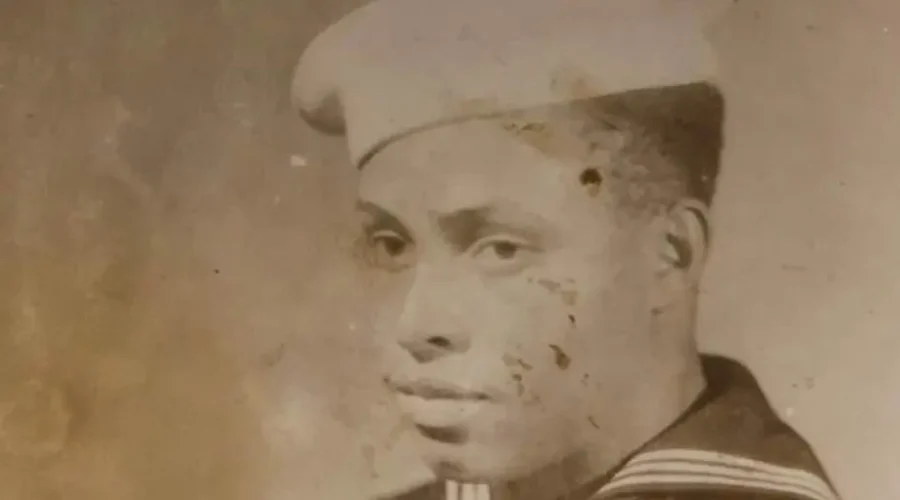
At 101, World War II veteran Levern Owens still finds his mind wandering back to the vast expanse of the ocean, the islands of the South Pacific and the time he spent feeding both fellow sailors and his local community.
Although his voice has weakened a bit due to a recent hospital stay, his memory remains sharp as he reminisces about Navy warships, enemy submarines, and life that glided beautifully through the twentieth century and today.
Born in June 1924 in the small farming community of Latta, South Carolina, Owens grew up in a farming family during the height of the Great Depression. Survival meant work and all hands on deck for him and his extended family.
“I grew up on a farm,” Owens recalled. “I didn’t have much time to go to school because I worked on the farm.”
In the rural, Jim Crow-era South, opportunities for young African-American men were scarce. For Owens, naval service was not just a duty; it was a way forward and a possibility for a brighter future.
Owens overcame the odds, making it through his sophomore year of high school before enlisting in the Navy while still a teenager.
In total, Owens devoted nearly 27 years of his life to the defense of the country in several branches:
- Navy: Active duty from September 1943 to May 1946
- Naval Reserve: Served from 1946 to 1951
- North Carolina Army National Guard: Served from 1965 to 1984
Navigating Segregation and the Pacific Theater
When Owens coached at Virginia during World War IIhe did so in an all-African-American unit.
The military was strictly segregated, and African-American sailors were almost exclusively relegated to labor-intensive service-related roles.
“I came in as a first class petty officer, and I was first class until I got out,” Owens said, noting how rare the promotion is for African-American service members. “You couldn’t have been promoted.”
Eventually, Owens switched from unloading cargo to working in the kitchen, a pivot that would define the rest of his life.
“I started cooking. And I cooked the rest of the time I was there,” he said.
His assignments took him straight to the Pacific theater. Once in California, he boarded a ship bound for the South Pacific, where Allied forces were locked in a brutal island-hopping campaign against Japanese forces.
Shadows of war and narrow escape
Life at sea was a constant game of cat and mouse. Owens remembers the tension of navigating waters patrolled by Axis elements.
“We had to turn around a lot because the submarines started chasing us,” he recalled.
His unit moved through strategic locations near Papua New Guinea, including Manus Island and Bougainville. Owens and his fellow sailors arrived immediately after the heavy fighting ended to establish the positions of friendly forces.
“When we got off the ship, the Marines got in first,” he explained. “After they left, we had to go in and secure him.”
The clearing operations were dangerous and dark.
Japanese soldiers often hid in underground fortifications long after the main battle was over. “They were in those bunkers,” Owens said. “We just filled the opening so they can’t get out.”
Two moments from the war remained etched in his memory:
- In August 1945, Owens witnessed history from afar: the atomic bomb dropped on Hiroshima. “We saw it go. You couldn’t hear the sound, but you could see the cloud coming from it.”
- On another occasion, Owens narrowly cheated death. Shortly after his crew finished unloading the ship with ammunition and went ashore, the ship suddenly exploded. “When we got to the island, the ship exploded.” Having already disembarked, Owens walked away unharmed.
It wasn’t all danger, though. Owens recalls the camaraderie that kept him and his fellow sailors sane, often found in downtime playing baseball and basketball to catch a glimpse of life back home.
75 years of curatorial taste
When the war ended, Owens took his culinary skills to the civilian world, building a legendary 75-year career in the hospitality industry. He spent years in Atlantic City, New Jersey, working as a waiter and cook for summer tourists and cooking for schools in the winter.
He eventually settled in Lexington, North Carolina, becoming a fixture at local country clubs, churches, weddings and dinner parties. For Owens, cooking wasn’t just a job; that was his identity.
“Anything that came, if I could, I did (laughs),” Owens said.
Retirement did not come easily to a man characterized by hard work. “He retired, I think, for about six months and went back to work,” said his daughter, Toria Owens. “He tried three times in total to pull up before he actually sat down.”
Owens finally hung up his apron at age 91 after a long career at the local Lexington business, where he became a beloved industry icon.
Today, Owens is surrounded by a huge, loving family that includes five children, along with numerous grandchildren and great-grandchildren.
For Toria, his daughter who now helps care for him, living with a centenarian like her dad is a daily gift.
“When he talks to me, I learn about pieces of history from a real person who went through those things,” she said. “It’s not something I just read in a book. I’m proud to call him my dad. I’m proud that he did what he did back then to keep most of us safe.”
Although health problems have slowed him down, Owens still loves the simple pleasures: sitting outside looking at flowers, taking car rides and watching classic westerns. And his daughter notes that his legendary wit hasn’t faded a bit.
Last week, Owens and family celebrated his birthday.
“She doesn’t act like she’s 102,” Toria said, smiling. “His body may slow down a bit, but his mind is still going. Give him a few more days, and he’ll be back talking to us and trying to tell us how to cook.”
This article was originally published on Salisbury VA Health Care System page and is edited for style and clarity.