
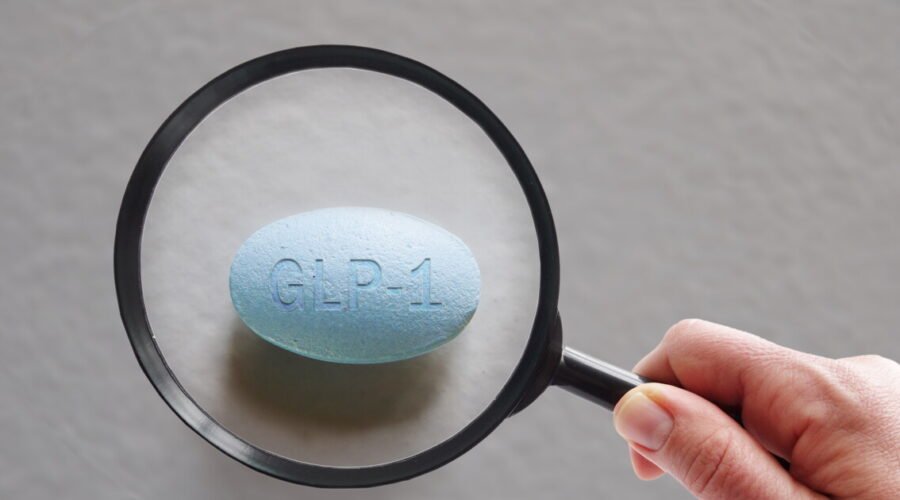
Inside Medicare’s new GLP-1 demonstration
On July 1, 2026, the Centers for Medicare and Medicaid Services launched the Medicare GLP-1 Bridge Program, a temporary demonstration.
Content processing
On the face of it, they have a significant expansion of access to drugs
How the bridge program works
The first thing to understand is what this program is not. The Medicare GLP-1 Bridge is a CMS-led Section 402 demonstration; does not have a Medicare Part D plan that offers prescription drug coverage. This distinction is not a technicality. It shapes everything else about how the program works.
The Bridge Program runs from July 1, 2026 through December 31, 2027, and operates outside of the standard Part D benefit. Instead of going through a beneficiary’s Part D plan, the central system run by Medicare handles admissions, processes claims, and pays pharmacies directly.
Read more:
Covered
Three GLP-1 products are eligible according to Bridge: Foundayo, Wegovy (both injection and tablet formulations), and Zepbound, although only Zepbound’s KwikPen formulation qualifies. Single-dose vial and single-dose pen formulations of Zepbound are expressly excluded.
Who fulfills
To be eligible, a beneficiary must be 18 years of age or older and meet one of three clinical thresholds: a BMI of 35 or more; A BMI of 30 or greater with an underlying condition such as heart failure, uncontrolled hypertension, or chronic kidney disease; or a BMI of 27 or greater with risk factors such as prediabetes, prior heart attack, or peripheral artery disease.
On the plan side, beneficiaries must be enrolled in a stand-alone Part D plan or a Medicare Advantage coordinated care plan that includes drug coverage. Employer and union group exemption plans, Special Needs Plans and two eligible beneficiaries who meet clinical criteria are eligible to participate. Private fee-for-service plans, fee-for-service plans, prepaid health care plans, PACE organizations, replacement plans, and religious fraternity plans are not eligible. If your organization sponsors retiree coverage through one of these excluded plan types, your members will not have access to this program.
What it costs and how to get the benefits
Beneficiaries pay a fixed monthly payment of $50. Because the drugs are provided outside of the standard Part D benefit, none of these copayments count toward the beneficiary’s actual out-of-pocket costs, and low-income cost-sharing subsidies do not apply to any portion of them. Manufacturers will provide eligible drugs at a net price of $245 per monthly supply, which is not included in the beneficiary’s covered drug costs.
A medical provider must submit a prior authorization request along with a prescription for the appropriate GLP-1 drug to a central processor, not directly to CMS.
Read more:
The bridge had to lead somewhere
The Bridge Program was never designed to be permanent. It was originally run alongside a planned successor — the Better Lifestyle and Nutrition Approaches for Comprehensive Health (BALANCE) Model — that would have allowed Part D plans to elect continuous GLP-1 coverage for weight loss beginning in January 2027. Unfortunately, the BALANCE model was delayed indefinitely while the GLP 2027-1 Bridge was extended throughout December.
The population most protected by CMS programs is excluded here
Most Medicare demonstration programs create protections for beneficiaries who qualify for low-income subsidies, precisely because affordability is often a barrier to access. While $50 may seem like a bargain, it’s a barrier for many who would benefit the most from this protection.
What this means for plan sponsors and administrators
This program sits at an unusual crossroads: real and meaningful to compliance members, structurally uncertain beyond sunset in 2027, and operationally complex enough that misinformation will spread faster than accurate guidance if plan sponsors don’t step up.
For employers with retiree populations and group plan sponsors
- Confirm plan type eligibility now. If your retiree drug coverage is run through an EGWP, your population is eligible, but you should coordinate with your PBM and TPA to understand how Bridge claims will (or will not) appear in your data, as they are run outside of the standard Part D claims flow.
- Advance the initial BMI rule. Members and their doctors should understand that historical BMI – not current BMI – determines eligibility at the start of therapy. This will lead to confusion and appeals without proactive communication.
- Don’t let members assume this is permanent. Any communication from members regarding this program should be explicit that it is a temporary demonstration that will end on December 31, 2027, and no permanent replacement has been confirmed.
Most importantly, make sure you are working with a partner who is reading the fine print on your behalf and guiding you through all the potential pitfalls. This is a very complex piece of legislation, and any misunderstandings can be costly for you and your employees/retirees.