Bridging the distance: Bringing care closer to home for rural Veterans
On the Navajo Nation, VA interns are closing the gap to care
For rural veterans living on or near Navajo Nation reservations, seeking care often meant hours on the road.
Such distances present a serious barrier, especially for elderly or disabled veterans. In rural New Mexico, VA interns are working to fill that gap, bringing affordable, high-quality medical care to underserved veterans while training the next generation of medical professionals. The effort is part of a VA pilot program launched this year at five sites across the United States.
Expanding rural access to care
By partnering with academic affiliates, hospitals and clinics, the VA MISSION Act program, known as the Graduate Medical Education and Residency (PPGMER) Pilot Program, ensures rural veterans have access to needed care much closer to home.
To date, 34 VA residents across the US have served 1,440 unique patients, both veterans and non-veterans. These rotations in rural and underserved locations, including managed facilities Indian Health ServiceIndian tribes or tribal organizations have proven mutually beneficial for students and veterans.
“I like it here (at Northern Navajo Medical Center), and it’s close so I can get treatment,” said Army veteran Virgil Wood. “It’s a nice place, beautiful, and the people are really nice, from the doctors to the nurses. They really understand what’s going on with you and help you.”
Instead of traveling long distances for basic needs, veterans can see providers, obtain medications, and receive personalized attention in their communities.
Innovative approaches to care
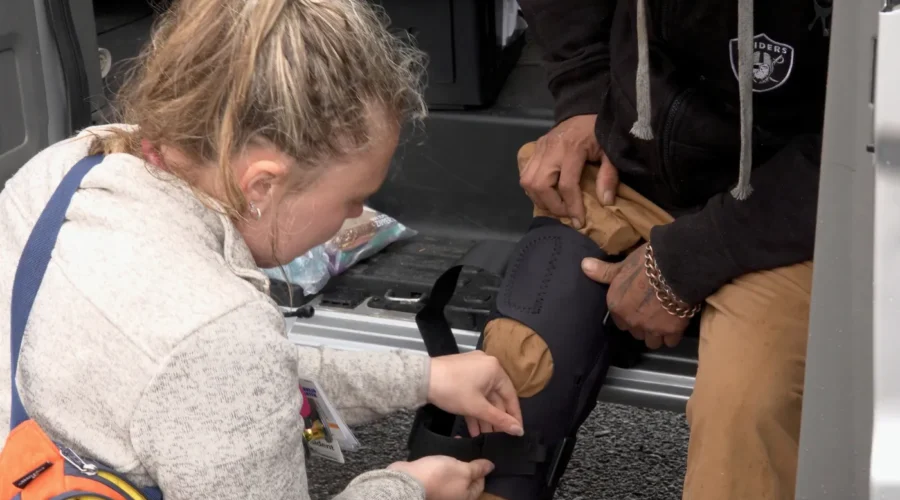
One of the signature programs unique to Northern Navajo Medical Center is “street medicine,” an effort that provides health care directly to patients in need, founded by Dr. Asha Atwell, an IHS doctor there. In this program, doctors travel in vans stocked with medical supplies to designated public outdoor locations to treat patients in their community on a weekly basis.
“We treat patients where they are,” said resident Dr. Chantel Clark. “We provide medical resources to those who cannot access traditional care: distributing medicine, food, and clothing, including socks; checking blood pressure; and offering testing for sexually transmitted diseases.”
Building trust and cultural understanding
Serving a population that includes many members of the Navajo Nation, the GME pilot meets veterans where they are. In neighboring Arizona, another pilot program resident is doing the same.
“I’m really impressed with how the VA is able to meet the needs of veterans across the spectrum,” said Dr. Tessa Foti, who recently completed her residency in this program at the Chinle Comprehensive Health Care Facility.
Foti also enjoyed learning about a patient population she didn’t know much about. “This was my first time practicing, or really being exposed to, the Navajo Nation, so I definitely think it was a valuable experience in gaining more cultural awareness and understanding,” she said.
Patients in this area are also uniquely hospitable, said Dr. Heather Kovich, who is stationed at the Indian Health Service (IHS) in Shiprock, New Mexico, at the Northern Navajo Medical Center.
“Our patients, veterans and non-veterans, are always so engaging, especially for new students,” she said. “Our veterans enjoy working with residents, sharing their stories and helping them grow.”
Surveys of residents who participated in the pilot project show extremely positive experiences. “Residents appreciate the opportunity to provide full-spectrum care and apply all of their training in a rural context, supporting those who need it most,” Kovich said.
They change lives, inspire the future
For many medical specialties, the GME pilot is more than a training ground; it’s inspiration.
“After my rotation, I would seriously consider working at an IHS or VA facility,” Clark said. “I love hearing veterans’ stories, understanding their experiences and being there when they need care. The gratitude veterans show is remarkable and it’s a privilege to serve.”
Foti echoed those thoughts. “Veterans have a sense of humor that can just be wonderful,” she said. “They are difficult, but their health needs can be complex. I am honored to help them navigate their health journeys.”
Clearly, the feeling is mutual. Veterans consistently report satisfaction with care. “She gave me all the information I needed and made sure I understood what was going on with me,” Wood said of his interactions with Clark. “I was always pleased. She treated me with respect.”
Dedicated to veterans, close to home
In addition to meeting immediate medical needs, this initiative reflects a commitment to the well-being and access to care of every veteran. Whether through primary care, innovative street medicine or building bridges of cultural understanding, the program is paving the way for rural veteran health care across the country.
As the pilot program continues through 2031, lessons learned in New Mexico and other rural sites in Arizona and Wyoming will inform future efforts, proving that with the right partnerships and commitment, the barriers of distance can be overcome.
For veterans and families in the region, it’s more than comfort, it’s care rooted in respect, understanding and gratitude for their service. And for the next generation of VA healthcare workers, it’s an opportunity to learn from, be inspired by, and serve those who have served.
Trainees like Clark and Foti are among the 124,000 health profession trainees trained each year by the VA, overseen by the Office of Academic Affiliation (OAA). Find out more information about OAA or PPGMER VA MISSION Act.