What Is a Credit Union vs. a Bank
Just a tip:
Most people are eligible to join a credit union through their employer, community or professional association, and most are never verified. Credit unions are member-owned nonprofits, so instead of paying out to shareholders, they return profits in the form of lower fees, better savings rates, and cheaper loan rates. Check what’s available at a big bank before defaulting.
The eligibility step is where most people get stuck, and it’s the part that has changed the most. Credit unions organize around a membership base: an employer, a school district, a county, a church, a union, or a professional group. These areas have increased so far over the years that most adults unknowingly qualify for several.
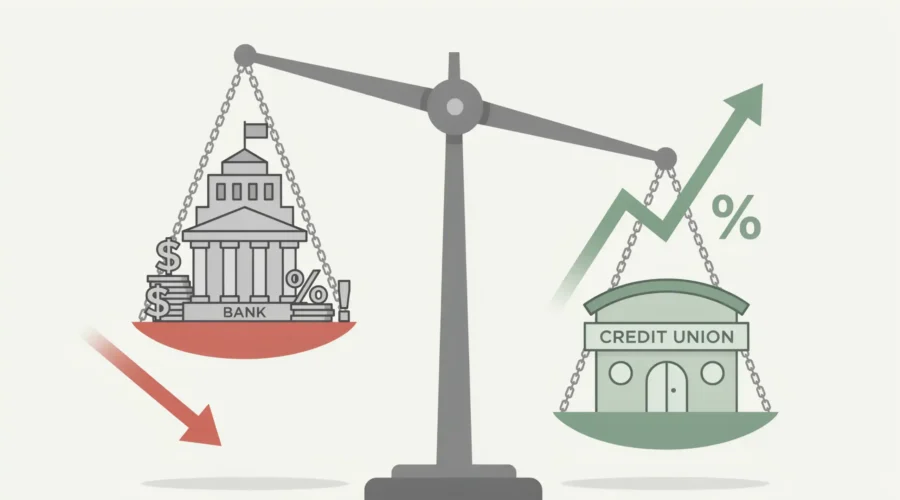
It’s the member-owned structure that makes checking worth your time. A bank answers to shareholders, so fees and thin savings rates exist to generate profits. The credit cooperative has no shareholders. Profits are returned to members in the form of cheaper loans, higher deposit yields and lower fees. Deposits are also protected. The National Credit Union Administration insures accounts up to $250,000 per deposit, the same coverage that the FDIC provides to bank customers.
Access holds up better than its small-town image suggests. Thousands of credit unions share branches and surcharge-free ATMs through a national cooperative network, so a local credit union can still serve you when you’re traveling or on the move.
Finding your way in is quick. Start with your employer, as many companies work with a credit union as a benefit. Find NCUA’s free online locator for credit unions that accept anyone who lives, works or worships near you. Check the professional associations, alumni groups and unions you already belong to. If it’s a relative, most credit unions extend the option to immediate family. Some qualify you with a small donation to an affiliate nonprofit.
When you find one you can get into, pull out their fee schedule and rate sheet and set it up next to your bank. If the credit union wins on the accounts you use the most, move direct deposit first, then switch automatic payments to a statement cycle so nothing bounces.
Make and save more money, spend less time

A tip, every morning
Join over 50,000 readers. Actionable, free, no nonsense – just advice.
No spam, ever. Unsubscribe at any time.
Editorial and advertiser disclosure: The editorial content on this website is not provided, commissioned, reviewed, endorsed or otherwise endorsed by any advertiser. The opinions expressed are ours alone and not those of any advertiser. The offers that appear are from companies that we may receive compensation for. However, this compensation does not affect where and how these companies are mentioned on the website. We do not include all companies or all offers available on the market.
Related: