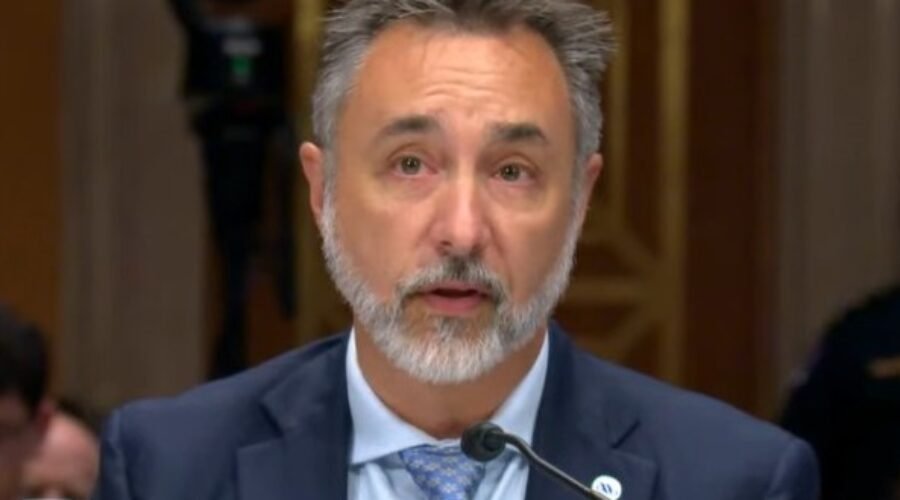
ABA’s Benda shares policy recommendations for fighting AI-enabled scams
Artificial intelligence isn’t replacing fraud, it’s industrializing it, Paul Benda, executive vice president for risk, fraud and cybersecurity, told senators today.
Benda testified before the Senate Select Committee on Aging during a hearing on the growing threat of AI fraud. He explained how generative artificial intelligence has made fraud more believable, personalized and scalable while allowing criminals to exploit trusted identities and communication channels. He also shared several policy recommendations to alleviate the problem.
“A criminal can now create a convincing voice, video, photo, text message, ad or online persona with little technical skill and at a very low cost,” Benda said. in prepared remarks.
Benda shared how banks are using artificial intelligence, advanced analytics, employee training, consumer education and information sharing to better identify suspicious activity and protect consumers from increasingly sophisticated fraud schemes.
In terms of policy recommendations, Benda called for the establishment of a National Fraud and Fraud Prevention Office, strengthening telecommunications safeguards, improving the exchange of fraud-related information, enacting Fraud Act and modernizing identity and authentication systems.
“Congress can help by establishing responsible national leadership, strengthening telecommunications safeguards, improving information sharing and recovery, supporting modern identity systems and ensuring that every sector involved in the fraud lifecycle is responsible for protecting the public,” Benda said.