
How to stay safe and healthy during extreme heat
The season of extreme heat is in full swing. *First published on 6/27/25. Updated 2/7/26.
Temperatures high enough to be dangerous to health are occurring across the country. Extreme heat, defined as temperatures above 90 degrees Fahrenheit for at least two days, can lead to serious health problems, medical emergencies, and even death.
Fortunately, there are steps you can take to prevent health problems and stay safe during extreme heat.
Follow these extreme heat safety tips
- Try to stay indoors during the hottest part of the day (usually 10am to 4pm).
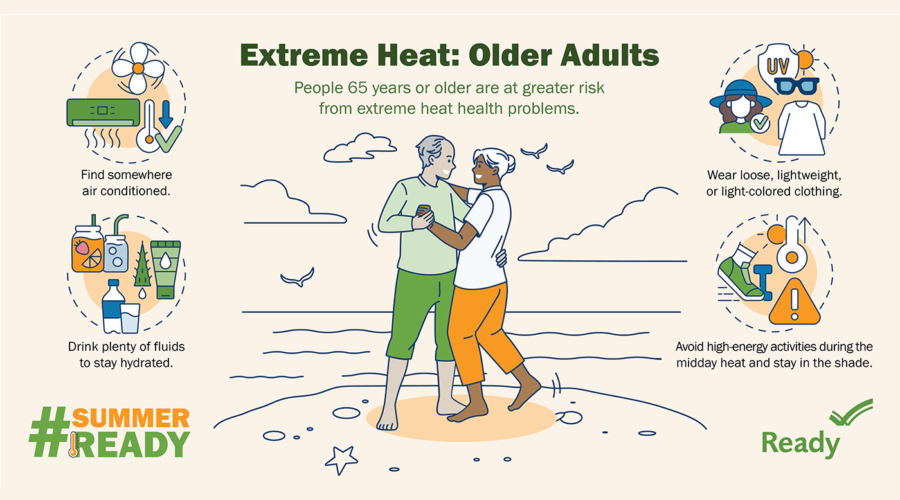
- If you must be outside, wear light, loose clothing that covers your arms/legs and apply SPF 30+ sunscreen frequently. Stay in the shade as much as possible.
- Avoid exercising outdoors on hot days. Do all necessary outdoor activities during the coolest parts of the day or evening when possible.
- Drink more water and avoid drinks that contain caffeine or alcohol.
- If you’re too hot and can’t get to a cooler area, cool down with wet cloths.
- Never leave children or pets alone in closed vehicles. Check on vulnerable family, friends and neighbors during extreme heat.
- The fans will not cool you down enough in indoor temperatures above 90*! You must look for a refrigerated or air-conditioned location. If your home is too hot, find a cool location: go to the library, the mall, a friend’s house, ordesignated cooling center.
- Be prepared forpower outagesduring extreme heat. If you rely on medical equipment or refrigerated medications, talk to your doctor about an outage plan.
Recognize the early signs and symptoms of heat illness
- Heat Cramps: Muscle pains or cramps are the first sign that the heat is affecting the body.
- Heat exhaustion and heat stroke: Profuse sweating, paleness, fatigue, dizziness, headache, nausea, vomiting or fainting are more severe forms of heat illness.
- If signs of heat illness appear:
- Stop any exercise
- Movementto a cooler location
- A drinkwater or sports drink
Be prepared and informed
- Search for local emergency alerts at weather.gov and sign up to receive alerts at FEMA or The Weather Channel applications.
- Understand the difference between Heat Forecasts, Heat Watches and Heat Warnings/Warnings.
- Identify nearby cooling shelters, especially for those without access to reliable air conditioning or other cooled spaces. Cooling areas have been found online or by calling 2-1-1 (state helpline) or 3-1-1 (city helpline) or your local health department’s website.
- Go to heat.gov for the latest heat information and printables. Additional resources are available from the CDC heat health and heat stress at work and from HHS onwards tools and resources.
- Remember, always follow your local instructions regarding any inclement weather.
Prepare for future heat waves
- Update yourself Thermal action plansespecially if it is you or your loved ones at greater risk of extreme heat effects due to age, pre-existing conditions, certain medicines or reliance on medical devices.
- Make sure you are registered for local emergency alerts.
- Let friends and family know about available heat preparedness actions, including preparing your home for extreme weather with support home energy assistance programs.
- Share information about heat preparedness or early recognition of heat illness. Information is available to people who are at greater risk of severe weather effects, such as those experiencing homelessness or taking certain mental health medications.
- If you are a health care worker, educate yourself and your colleagues about the early signs of heat illness and what to do. Usage available tool sets screen patients for heat-related risk factors and help them create a Thermal action plan.
VA heat resources
- VA Support for Homeless Veterans: Helps veterans who are homeless or at risk of homelessness connect to housing and services. Contact your local homeless program coordinator, or National Call Center for Homeless Veterans at 1-877-4AID VET (877-424-3838)..
- VA housing support: offers veterans home loans to purchase, refinance, build, improve or maintain their home, as well as other housing assistance services and benefits.
- VA Disaster Assistance, Resources for disaster logistics and mobile medical units: assistance with temporary accommodation, emergency prescriptions and replacement of damaged medical equipment, with various mobile assets deployed in affected areas to ensure continuity of care, including temperature-controlled medical/pharmacy units.
- Mobile veterinary centers:Vehicles with space for free, confidential counseling and crisis support with no appointments required.
- Veterans Crisis Line:Available 24/7 at 988 (press 1) or text 838255. You do not need to be enrolled in VA benefits or Medicare to connect.
- VA Health Connect: Enrollees can access health care 24/7 from anywhere.
Together, we can prepare and stay safe during the high summer heat this year and every year.